Steroid Acne Diagnostic & Treatment Advisor
Find the Right Treatment for Your Steroid Acne
This tool helps you identify your acne type and get personalized recommendations based on your symptoms and steroid use.
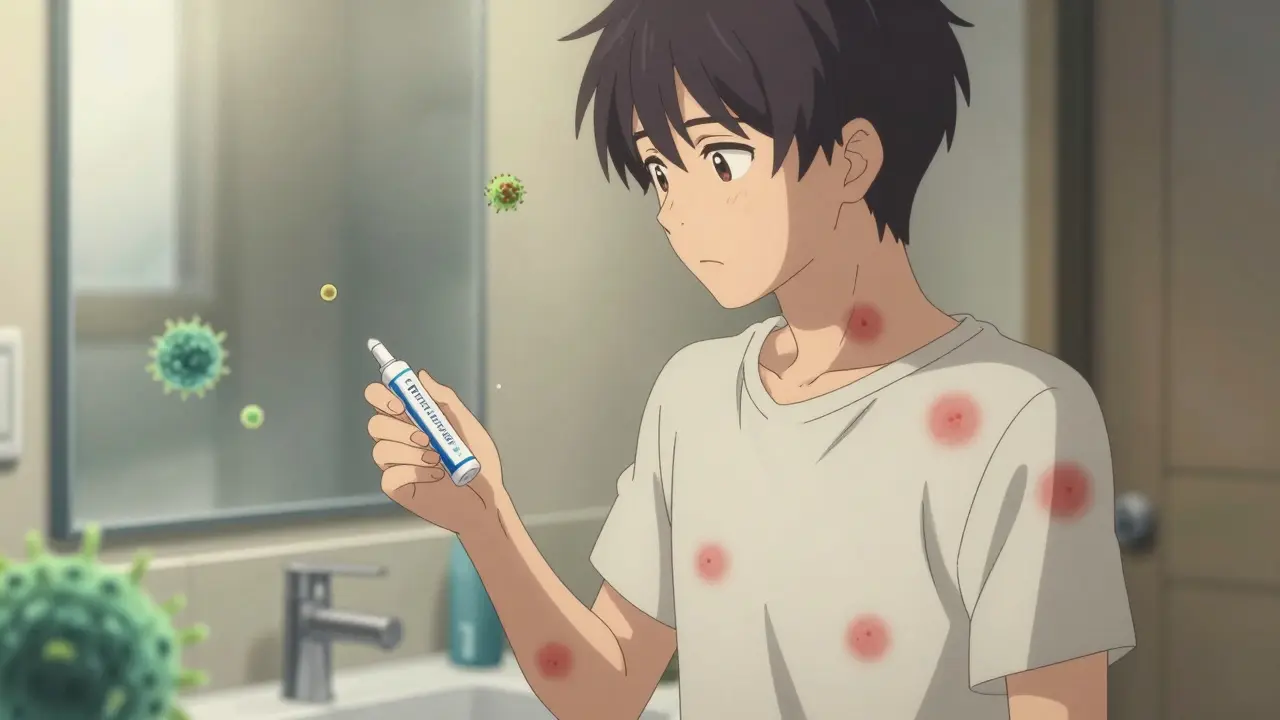
When you start taking steroids-whether it’s prednisone for asthma, an immunosuppressant after a transplant, or anabolic steroids for muscle gain-you don’t expect your skin to turn against you. But for 1 in 5 people on high-dose steroids, a sudden breakout appears: not the usual teenage zit, but clusters of identical red bumps on the chest, back, or even face. These aren’t caused by dirt, oil, or hormones alone. They’re a direct reaction to the steroids themselves. And if you’re still taking them for a medical condition, you can’t just stop. So what do you do?
What Steroid Acne Really Looks Like
Steroid-induced acne doesn’t behave like regular acne. It doesn’t start with a single blackhead. It shows up as dozens of small, uniform, red bumps-sometimes with whiteheads, sometimes without. They often appear in waves, spreading across the chest and upper back before moving to the face. Unlike typical acne, which varies in size and type, steroid acne lesions look almost identical, like they were stamped out by the same mold.
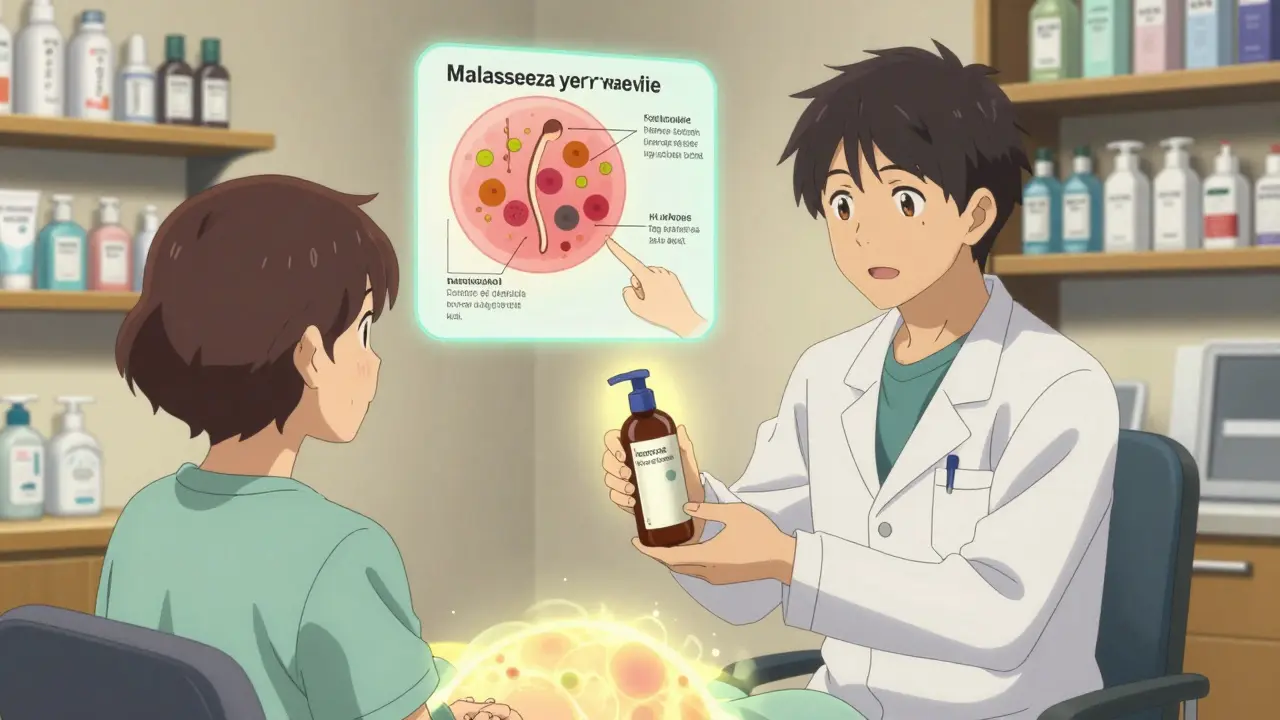
And here’s the twist: about 30-40% of cases aren’t acne at all. They’re Malassezia folliculitis, a fungal infection triggered by steroids disrupting your skin’s natural yeast balance. These itchy, pinpoint pustules mimic acne but won’t respond to benzoyl peroxide or salicylic acid. Misdiagnose it, and you waste months chasing the wrong solution.
Onset usually happens 4-6 weeks after starting steroids. A 40mg daily dose of prednisone? High risk. Anabolic steroid cycles? Even higher. It doesn’t matter if you’ve never had acne before. Steroids change your skin’s environment-increasing oil production, altering bacteria, and triggering inflammation through a pathway involving TLR2 receptors and Propionibacterium acnes. This isn’t just surface-level irritation. It’s a biological shift.
Why Your Regular Acne Routine Won’t Work
If you’re used to treating breakouts with face washes, scrubs, or spot treatments, stop. Harsh exfoliants, alcohol-based toners, and overwashing will make steroid acne worse. Steroids already damage your skin barrier. Adding abrasive products strips away what little protection remains, leading to more redness, dryness, and irritation.
And don’t assume antibiotics will fix it. Topical clindamycin might help for a few weeks, but resistance builds fast-especially with long-term steroid use. One patient on Reddit reported his acne cleared briefly with clindamycin, then exploded back worse than before. That’s because steroids create a perfect storm: they suppress your immune system just enough for bacteria and yeast to thrive, but not enough for your body to fight back on its own.
The real problem? Most people wait too long. By the time they see a dermatologist, they’ve got hundreds of lesions. The American Academy of Dermatology now warns: delay treatment past 8 weeks, and scarring becomes likely. Early action isn’t optional-it’s critical.
Topical Solutions That Actually Clear Steroid Acne
There’s one topical treatment that’s stood the test of time since 1973: tretinoin 0.05%. In the original study, 12 patients with severe steroid acne cleared 85-90% of their lesions in 2-3 months-even while still on high-dose prednisone. That’s not a fluke. Tretinoin works by unclogging pores, speeding up skin cell turnover, and reducing inflammation. It doesn’t kill bacteria; it fixes the environment where bacteria thrive.
Start slow. Use a pea-sized amount every other night. Apply it to clean, dry skin. Wait 20 minutes before moisturizing. If your skin stings or peels, cut back to twice a week. Gradually increase as tolerated. Don’t expect overnight results. It takes 6-12 weeks to see real change. But if you stick with it, the results are worth it.
Pair tretinoin with a 5% benzoyl peroxide wash used 2-3 times a week on the chest and back. It kills acne-causing bacteria without encouraging resistance. Avoid combining it with tretinoin in the same routine-use benzoyl peroxide in the morning, tretinoin at night.
For Malassezia folliculitis, swap the benzoyl peroxide for ketoconazole shampoo (2%) or selenium sulfide shampoo (2.5%). Lather it on affected areas, leave it on for 10 minutes, then rinse. Do this 2-3 times a week. It’s not glamorous, but it works. One transplant patient cleared 80% of his chest lesions in 8 weeks using this exact method.
Oral Options When Topicals Aren’t Enough
If your acne covers your chest, shoulders, and back-and tretinoin alone isn’t cutting it-oral treatments become necessary. For women, spironolactone (25-50mg daily) can help by blocking androgen receptors, reducing oil production. It’s not a magic bullet, but for those with hormonal sensitivity, it’s often the missing piece.
Doxycycline (100mg twice daily) is another option, especially if there’s visible inflammation. But limit it to 3-4 months max. Long-term use increases antibiotic resistance, and steroids already weaken your immune defenses. Don’t make it harder for your body to recover later.
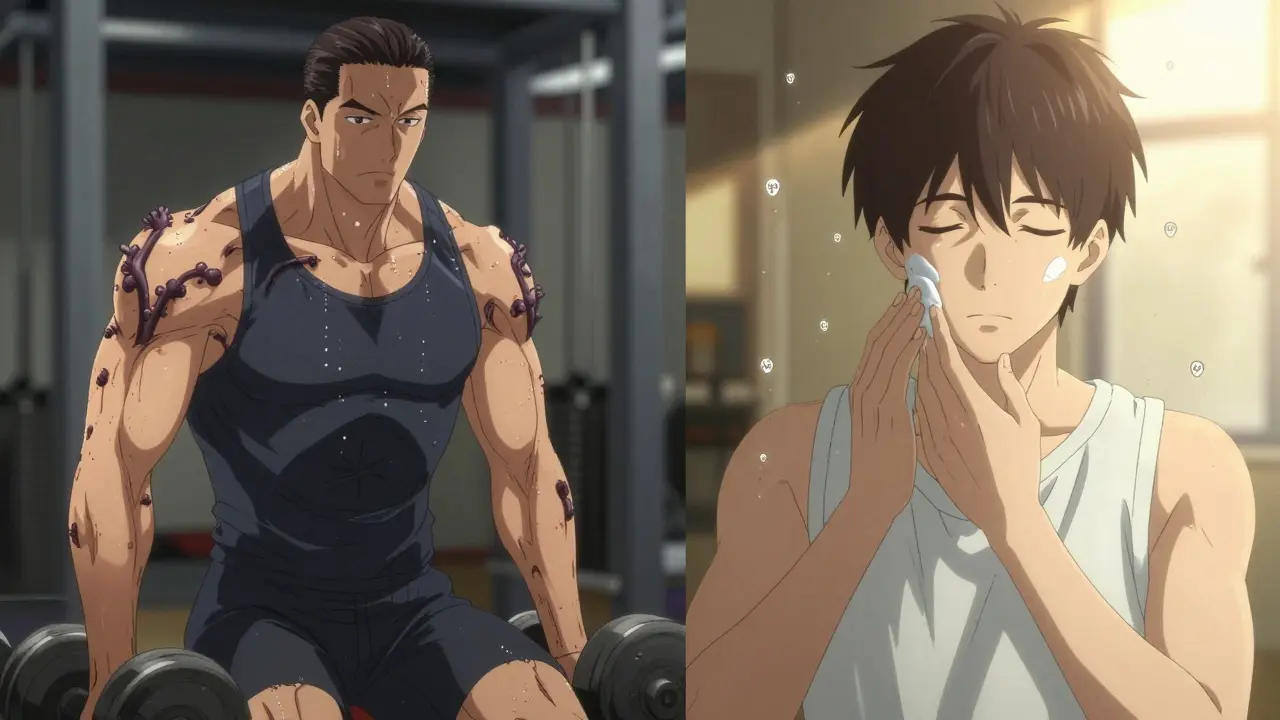
For severe, stubborn cases, isotretinoin (Accutane) is the most powerful tool available. It shrinks oil glands, reduces bacteria, and resets skin cell growth. But here’s the catch: if you’re using anabolic steroids, isotretinoin can trigger acne fulminans-a rare, dangerous form of acne that causes painful, ulcerated lesions and fever. Two bodybuilders were hospitalized after trying it mid-cycle. If you’re using steroids for muscle gain, isotretinoin is not safe. Period.
For medical steroid users, isotretinoin can be life-changing-but only under strict supervision. The iPLEDGE program is mandatory. You need monthly blood tests. You can’t get pregnant. You need to avoid alcohol and vitamin A supplements. It’s intense, but for some, it’s the only way to regain control.
Lifestyle Adjustments That Support Healing
Medication alone won’t fix steroid acne if your daily habits are working against you. Here’s what actually helps:
- Wear loose, breathable clothing. Tight shirts trap sweat and oil against your skin. Cotton is your best friend.
- Shower immediately after sweating. Whether it’s from exercise or just a hot day, sweat feeds bacteria. Don’t let it sit on your skin.
- Use non-comedogenic moisturizers. Steroids dry out your skin. Skip heavy creams. Look for hyaluronic acid or ceramide-based formulas.
- Avoid touching or picking. Every time you squeeze a bump, you risk scarring or spreading infection.
- Protect your skin from the sun. Tretinoin and steroids both increase sun sensitivity. Use a mineral sunscreen (zinc oxide or titanium dioxide) daily.
And if you’re on long-term steroids? Talk to your doctor about whether you can reduce the dose. Sometimes, even a 10% reduction can make a difference in your skin without risking your health.
When to See a Dermatologist
You don’t need to wait until your acne is out of control. If you’ve been on steroids for more than 4 weeks and notice new bumps appearing, schedule a visit. A dermatologist can tell you whether it’s acne, Malassezia, or something else-and adjust your treatment before scarring sets in.
Telemedicine platforms like Curology and Apostrophe have made specialist care more accessible. Between 2020 and 2022, Curology saw a 30% spike in steroid acne consultations. These services offer personalized prescriptions, progress tracking, and dermatologist support-all from your phone.
Don’t let embarrassment stop you. Steroid acne is common. It’s not your fault. And it’s treatable-even if you can’t stop the steroids.
The Future of Treatment
Researchers are now exploring drugs that block the TLR2 pathway-the exact mechanism steroids hijack to trigger inflammation. Early trials show a 65% reduction in lesions with topical TLR2 inhibitors. Companies like Mother Dirt are testing products with ammonia-oxidizing bacteria to restore your skin’s natural microbiome after steroid damage.
Eventually, genetic testing may identify who’s most at risk for severe steroid acne based on TLR2 variants. That could mean personalized prevention-before the first bump appears.
For now, the tools we have work. Tretinoin. Benzoyl peroxide. Antifungal shampoos. Spironolactone. Isotretinoin-with caution. The key isn’t finding a miracle. It’s using the right tools, at the right time, with the right patience.
Steroid acne doesn’t disappear overnight. But with the right approach, it doesn’t have to define your skin-or your life.
 FDA Generic Drug Approval: Step-by-Step Process for ANDA Submission
 Cialis Black vs Other ED Drugs: Tadalafil Comparison Guide
 Exploring the Best Alternatives to Valtrex for Herpes Treatment
 Hypothyroidism vs. Hyperthyroidism: Symptoms, Causes, and Treatment Options
 Transform Your Health with Gamma Butyrolactone (Gbl): The Game-Changing Dietary Supplement You Need to Know About
Oladeji Omobolaji
January 23, 2026 AT 02:45Man, I been on prednisone for my lupus for three years now. Skin went from smooth to a battlefield. Tried everything until I found that ketoconazole shampoo trick. No joke, it saved my chest. Thanks for this.
Stacy Thomes
January 24, 2026 AT 15:49YESSSSS TRETINOID IS A GAME CHANGER!!! I was ready to give up until my derm pushed me to try it. It burned like hell at first, but now my skin looks like a newborn’s. Don’t quit!
Anna Pryde-Smith
January 26, 2026 AT 15:19Ugh I hate how everyone acts like this is just ‘bad skin’ like it’s your fault. I’m on steroids for a life-saving transplant and now I’m supposed to feel ashamed because my chest looks like a science experiment? This post is the first thing that actually made me feel seen.
dana torgersen
January 28, 2026 AT 04:30you know... i think... maybe... it's not the steroids... it's the... uh... the *energy*... of the skin? like... the vibrations? i read this guy on Medium... he said TLR2 is just a placebo for the immune system's existential crisis... and also... i think... maybe... we're all just... too stressed? 🤔
Janet King
January 28, 2026 AT 12:51It is important to note that tretinoin should be introduced gradually to avoid irritation. Moisturizing after application is essential. Avoid sun exposure. These are not suggestions. They are medical guidelines.
Vanessa Barber
January 28, 2026 AT 22:19Yeah right. Tretinoin works. Whatever. I tried it. My skin turned into a desert. Then I started using coconut oil. Now I look like a Renaissance painting. The real cure is rejecting modern medicine.
Dawson Taylor
January 30, 2026 AT 12:19Effective dermatological intervention requires alignment with physiological response patterns. The data supports topical retinoids as first-line. Alternative etiologies must be ruled out before escalation.
Laura Rice
January 31, 2026 AT 09:10OMG I just found out I have Malassezia and I didn't even know it was a thing! I thought I was just ugly. Now I'm using ketoconazole shampoo like it's perfume. I feel like a warrior. Thank you for this!! 💪✨
Andrew Smirnykh
January 31, 2026 AT 18:44In Nigeria, we use neem oil for skin issues. I wonder if it would help with steroid acne. The plant has natural antifungal properties. Maybe it’s worth a try alongside the treatments mentioned.
Sallie Jane Barnes
February 1, 2026 AT 14:46If you're on long-term steroids, please talk to your doctor about dose reduction. Small changes can make a big difference. You're not alone. Healing is possible.
charley lopez
February 3, 2026 AT 05:52TLR2-mediated inflammatory cascade activation is a well-documented phenomenon in steroid-induced dermatopathology. The efficacy of retinoid therapy correlates with keratinocyte turnover modulation. Antifungal agents demonstrate efficacy in Malassezia-associated folliculitis via ergosterol synthesis inhibition.
Kerry Evans
February 3, 2026 AT 17:32People who take anabolic steroids are just asking for this. You think you’re invincible? Your skin is screaming for help and you’re still lifting. This isn’t a medical issue-it’s a consequence of arrogance.
Susannah Green
February 5, 2026 AT 04:41PLEASE use zinc oxide sunscreen!! I didn't and now I have dark spots that won't fade. Also, don't use the same towel for your face and body. I learned the hard way. 🙃
Kerry Moore
February 6, 2026 AT 20:14I appreciate the depth of this post. I’ve been managing steroid acne for five years. The combination of tretinoin and ketoconazole shampoo, spaced properly, has been the only consistent solution. Thank you for the clarity.
Sue Stone
February 7, 2026 AT 18:53I’ve been using the ketoconazole shampoo for two weeks and already see less redness. It’s weird to wash your chest with shampoo but it works. Who knew?