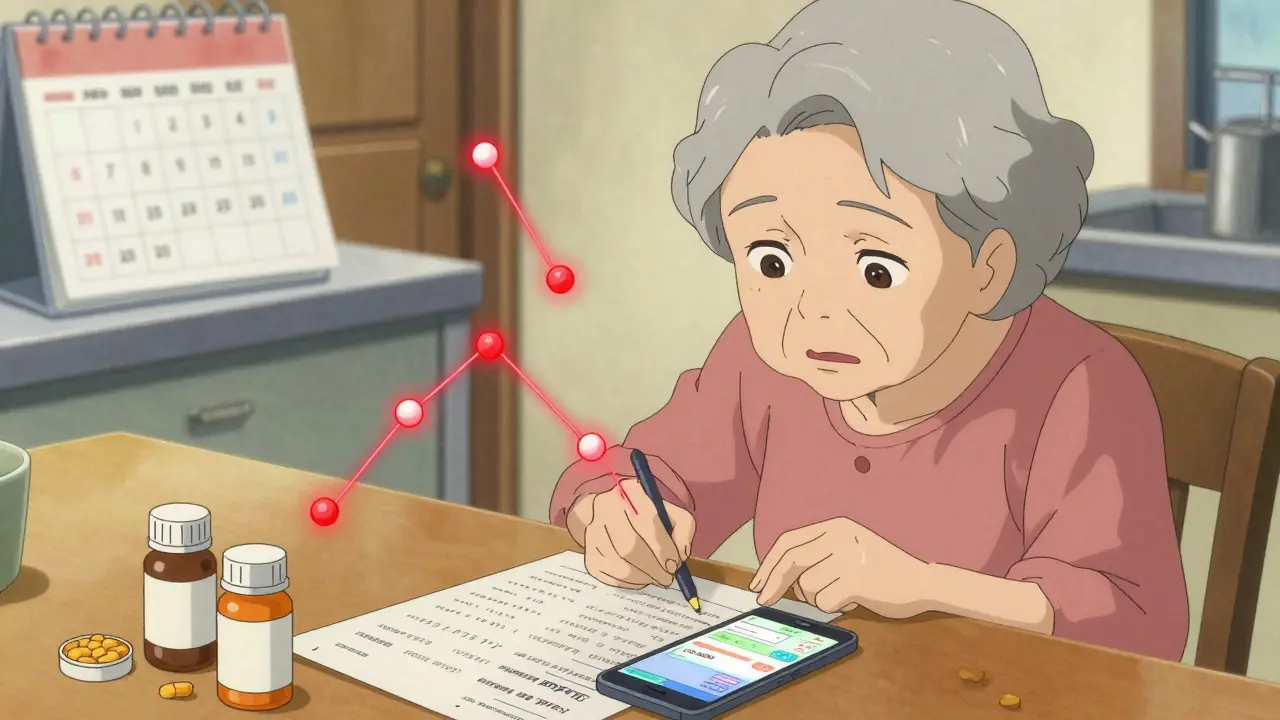
Every year, thousands of seniors end up in the emergency room because they took two pills that did the same thing-without knowing it. It’s not a mistake they made on purpose. It’s not laziness. It’s a system gap. Specialists focus on one part of your health-your heart, your joints, your blood sugar-but they don’t always see what your primary care doctor or another specialist prescribed. And if you’re taking eight, ten, or twelve medications, the chances of overlap go up fast. The result? Dizziness, low blood pressure, kidney strain, even internal bleeding. The good news? You don’t have to wait for a crisis to fix this. There are clear, practical steps you can take today to stop duplicate medications before they hurt you.
Keep a Real-Time Medication List
The single most powerful tool you have is a list. Not a mental list. Not a scrap of paper you lost last week. A real, updated, always-with-you list. Write down every pill, patch, liquid, and supplement you take. Include the name, dose, and why you take it. If your doctor prescribed it, write that down. If you bought it over the counter-like ibuprofen, calcium, or melatonin-write that too. Herbal teas, gummies, and vitamins count. Many people forget these, but they can cause just as much harm as prescription drugs.For example, if you’re taking a blood thinner like warfarin and also taking a daily aspirin for heart health, that’s a dangerous combo if your doctor didn’t mean for them to overlap. Or if you’re on two different pills for high blood pressure-say, lisinopril and metoprolol-without knowing both were prescribed, you could end up with dangerously low pressure. The fix? Bring your list to every appointment. Better yet, bring your pill bottles. Pharmacists and doctors can match the label to your list and spot duplicates instantly.
Use One Pharmacy
Switching pharmacies might seem harmless-maybe one is closer to your grandkid’s house, or another has cheaper prices. But here’s the catch: each pharmacy only sees what it dispenses. If you get your blood pressure meds from CVS and your diabetes pills from Walgreens, neither pharmacy has the full picture. Your pharmacist can’t warn you if you’re getting two different ACE inhibitors, or two different statins. That’s not their fault. It’s the system.Using one pharmacy means one pharmacist knows your whole story. They can flag duplicates before you even leave the counter. Studies show that when seniors stick to a single pharmacy, duplicate medication errors drop by nearly 40%. Many pharmacies now offer free medication reviews. Ask for one every six months. Bring your list. Ask: “Am I taking anything that does the same thing as something else?” Most pharmacists will be glad you asked.
Ask Your Doctor: Why Am I Taking This?
When a specialist writes a new prescription, don’t just say “thank you” and walk out. Ask: “Is this new medication replacing something I’m already on, or adding to it?” Too often, patients assume the new pill is meant to fix something the old one didn’t. But sometimes, it’s just a duplicate. One patient in Boston, 78, was prescribed both amlodipine and diltiazem for high blood pressure-two drugs from the same class. She didn’t know. Her primary care doctor had started one. The cardiologist started the other. She ended up with dizziness and falls. After her pharmacist caught it, both prescriptions were reviewed. One was stopped. Her balance improved in weeks.Use the teach-back method. After your doctor explains why you need a new pill, say: “So, just to make sure I got this right-you’re giving me this because ______, and it’s not replacing anything else?” If they hesitate, ask for a second opinion. It’s not rude. It’s smart.

Check for Overlapping Indications
Doctors don’t always write why they’re prescribing a drug. But if they do, it changes everything. A prescription for “metformin for diabetes” is clear. One that just says “metformin 500mg” leaves room for error. If you have two prescriptions for “pain,” one might be naproxen and the other celecoxib-both NSAIDs. Taking them together raises your risk of stomach bleeding. If your doctor wrote “for osteoarthritis” on one and “for rheumatoid arthritis” on the other, that’s different. But if both just say “pain,” you can’t tell.Ask your provider to include the reason on every prescription. If they don’t, ask your pharmacist to help. Many pharmacies now print the indication right on the label. If yours doesn’t, request it. You have the right to know why you’re taking each pill. And if two pills are meant for the same condition, ask: “Do I really need both?”
Know the Red Flags
Here are common duplicate pairs you should watch for:- Two blood pressure meds from the same class (e.g., two ACE inhibitors like lisinopril and enalapril).
- Two statins (e.g., atorvastatin and rosuvastatin)-never take both unless specifically directed.
- Two NSAIDs (e.g., ibuprofen and naproxen)-increases risk of kidney damage and bleeding.
- Two sleep aids (e.g., zolpidem and diphenhydramine)-can cause confusion and falls.
- Two antidepressants or anti-anxiety drugs-especially SSRIs like sertraline and fluoxetine.
Also watch for combinations like aspirin and warfarin, or vitamin E and blood thinners. These aren’t duplicates, but they’re dangerous together. Your pharmacist can spot these too.

Use Technology-But Don’t Rely on It
Electronic health records and pharmacy systems do have alerts. But they’re not perfect. A 2015 study found that even with alerts, doctors overrode them 68% of the time. Why? Too many alerts. Too little time. Or they thought they knew better. AI tools are getting better-Mayo Clinic’s new system now catches 5.8% of duplicates, up from 2.4%. But technology doesn’t replace human vigilance.Use apps like Medisafe or MyTherapy to scan pill bottles and track your meds. They can send reminders and flag potential clashes. But still, print a copy. Carry it. Show it to your doctor. Technology helps. It doesn’t replace you.
Make Medication Reconciliation a Habit
The Joint Commission requires hospitals and clinics to do “medication reconciliation” at every transition-discharge, admission, specialist visit. But in real life, it doesn’t always happen. So don’t wait for them to do it. Do it yourself. Before every appointment, review your list. Update it. Cross-check with your primary care doctor. Ask: “Can we go through every medication I’m on and decide what’s still needed?” This isn’t a one-time task. It’s an ongoing check-up, like your blood pressure.One study found that seniors who had a pharmacist-led medication review every six months cut their ER visits by 37%. That’s not magic. That’s consistency.
Who’s Responsible?
You might think, “This is the doctor’s job.” And yes, providers should coordinate. But the system isn’t built for that. Specialists see one organ. Primary care sees the whole body. Pharmacists see all the pills. But none of them have full access unless you give it to them. You’re the only one who holds all the pieces. Your memory, your list, your bottles, your questions-they’re the bridge.There’s no shame in saying, “I’m worried I’m taking too much.” There’s no shame in asking, “Can we cut one?” Many seniors feel guilty about “bothering” their doctor. But your safety isn’t a bother. It’s the point.
What should I do if I realize I’m taking two similar medications?
Don’t stop either one on your own. Call your primary care doctor or pharmacist right away. They’ll review both medications, check for risks, and decide which one to keep-or if a different option is safer. Stopping suddenly can be dangerous. For example, stopping a blood pressure pill too fast can cause a spike in pressure. Always get professional advice first.
Can over-the-counter meds cause duplicate therapy?
Absolutely. Many OTC drugs are the same as prescription ones. For example, ibuprofen (Advil) and naproxen (Aleve) are both NSAIDs. If you’re on a prescription NSAID like celecoxib, adding these can cause stomach bleeding or kidney damage. Even common supplements like fish oil, garlic, or ginkgo can thin your blood and clash with prescriptions like warfarin. Always list everything-even what you think is “harmless.”
How often should I update my medication list?
Update it every time you start, stop, or change a medication. That includes prescriptions, OTC drugs, and supplements. Make it a habit to review it every three months, even if nothing changed. And always bring it to every appointment-whether it’s your primary care doctor, a specialist, or the ER.
What if my doctor won’t listen to me about a possible duplicate?
You have the right to ask for a second opinion. Say, “I’ve been told by my pharmacist that this might overlap with another med I’m on. Can we review this together?” If they still dismiss you, ask for a referral to a geriatrician or a clinical pharmacist who specializes in senior medications. Many hospitals and clinics have medication therapy management (MTM) programs designed exactly for this.
Are there free tools to help track my meds?
Yes. Apps like Medisafe, MyTherapy, and MyMedList (from the American Pharmacists Association) let you scan barcodes, set reminders, and share your list with caregivers. You can also use a simple printable form from the FDA’s website or your local pharmacy. The key isn’t the tool-it’s consistency. Use what works for you, and keep it updated.
Senior health isn’t about taking more pills. It’s about taking the right ones. The goal isn’t to cut meds just to cut them-it’s to remove the ones that are redundant, risky, or unnecessary. Every pill you don’t need is one less chance for a mistake. Every conversation you have about your meds is one more layer of safety. You’re not just managing medications. You’re protecting your health. And that’s worth the effort.
 Pneumonia Types: Bacterial, Viral, and Fungal Lung Infections Explained
 Proton Pump Inhibitors and Antifungals: How They Interfere With Absorption and Effectiveness
 How to Check for Drug Interactions Before Starting New Medications: A Step-by-Step Guide
 Hypernil (Lisinopril) vs Alternative Blood Pressure Drugs: A Practical Comparison
 How Sun Exposure Triggers Fungal Skin Discoloration (Tinea Versicolor)
Sanjana Rajan
March 19, 2026 AT 03:19Ugh, I can't believe people still don't get this. My mom took three different blood pressure pills for years because each doctor wrote their own script. She ended up in the hospital with dizziness and a fall. No one ever asked her what she was already on. I had to drag her to the pharmacy and make them compare bottles. It took three hours. But now? She has one list, one pharmacy, and zero duplicates. Stop being lazy. This isn't rocket science.
Ryan Voeltner
March 19, 2026 AT 23:04Amadi Kenneth
March 21, 2026 AT 08:54Shameer Ahammad
March 21, 2026 AT 14:09Manish Singh
March 23, 2026 AT 10:35Nilesh Khedekar
March 24, 2026 AT 10:20jared baker
March 25, 2026 AT 16:18Michelle Jackson
March 27, 2026 AT 03:49jerome Reverdy
March 28, 2026 AT 07:39gemeika hernandez
March 28, 2026 AT 16:49Nicole Blain
March 30, 2026 AT 16:43Kathy Underhill
March 31, 2026 AT 22:00Srividhya Srinivasan
April 1, 2026 AT 18:25Prathamesh Ghodke
April 2, 2026 AT 16:41