Green Tea & Warfarin Interaction Estimator
Enter your daily consumption and click analyze to see the estimated risk level.
Imagine spending weeks fine-tuning your medication dose, only to have a few cups of your favorite morning brew throw your blood chemistry completely off balance. For people taking Warfarin is an oral anticoagulant medication used to prevent blood clots in conditions like atrial fibrillation or deep vein thrombosis, this is a very real scenario. While most people think of spinach or kale when they hear "Vitamin K," green tea hides a surprising chemical paradox that can either weaken your medication or, in some rare cases, complicate how your blood clots.
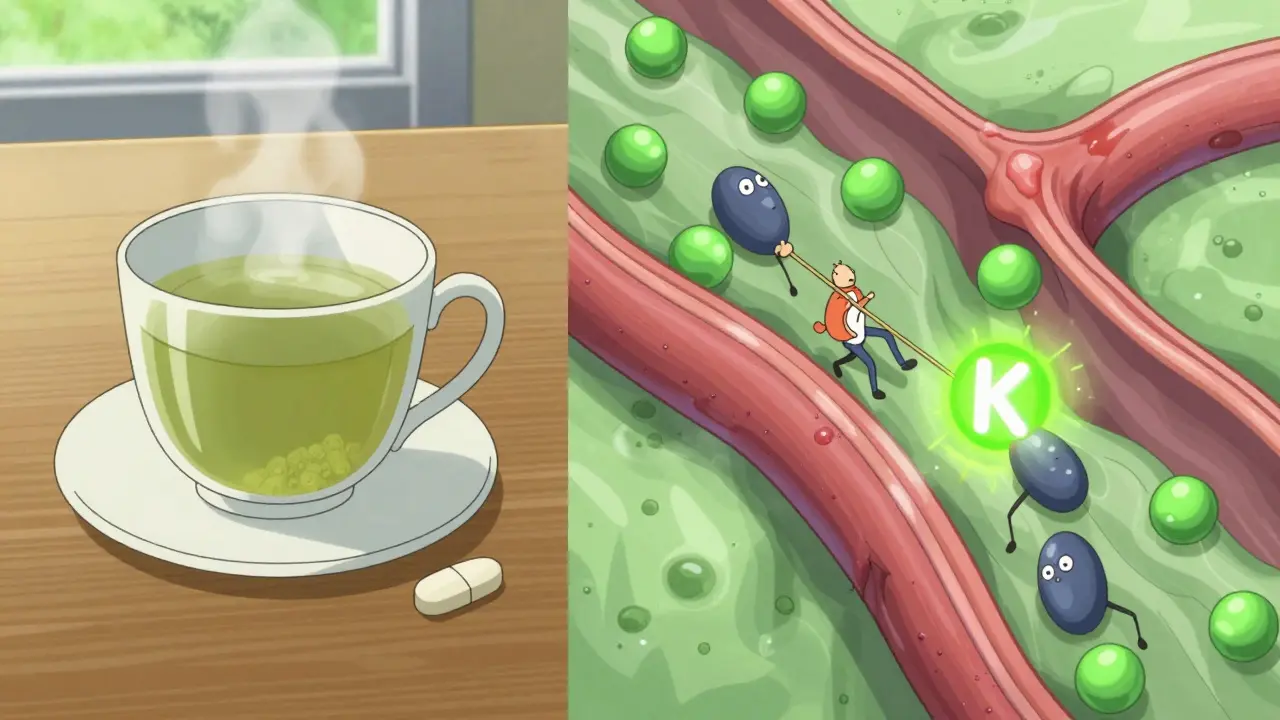
The core of the issue is a tug-of-war inside your veins. Warfarin works by blocking the enzyme VKORC1, which essentially stops your body from using Vitamin K to make clotting factors. When you drink green tea, you're introducing Vitamin K back into the system. If you drink too much, you provide the "fuel" the body needs to override the medication, which lowers your INR (International Normalized Ratio) and increases your risk of a dangerous clot.
The Vitamin K Paradox: Brewed Tea vs. Matcha
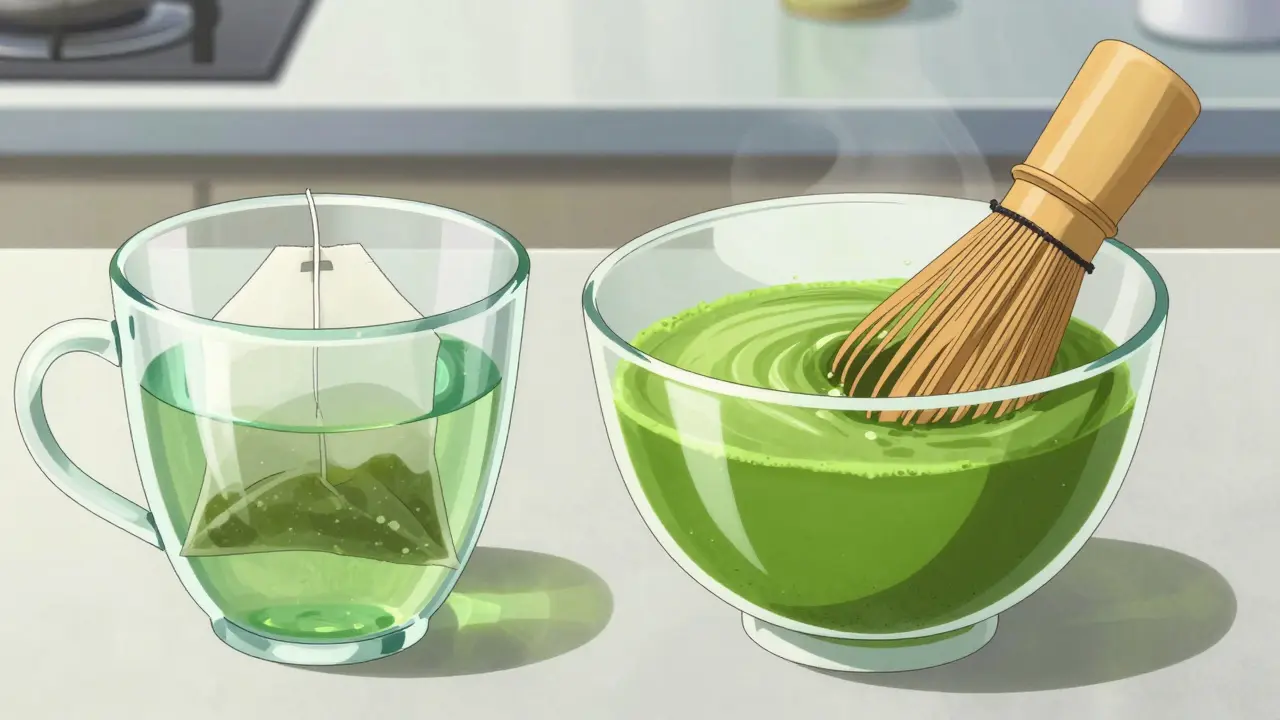
Not all green teas are created equal. If you're sipping a standard steeped bag of tea, you're dealing with a very small amount of Vitamin K-roughly 0.03 μg per 100g of the prepared drink. For most people, 1 to 3 cups a day won't even nudge the needle on an INR test. However, the story changes completely with Matcha. Because matcha is made from ground-up whole leaves rather than a steeped infusion, you consume the entire leaf. This can result in 10 to 20 times more Vitamin K than a regular brew.
There is also a secondary, confusing effect. Green tea contains Catechins, which are antioxidants that can actually inhibit platelet aggregation. In theory, this could make your blood "thinner," potentially counteracting the Vitamin K's "thickening" effect. This dual action is why some people see no change in their labs, while others experience wild swings. The net result usually depends on the volume you drink and how the tea is prepared-hot-brewed tea typically holds more Vitamin K than cold-brewed versions.
| Source | Approx. Vitamin K Value | Interaction Risk Level |
|---|---|---|
| Spinach (Raw) | 483 mcg | High |
| Broccoli | 141 mcg | Moderate/High |
| Dried Green Tea Leaves | 1,428 μg | Very High (Concentrated) |
| Brewed Green Tea | 0.03 mcg | Low (in moderation) |
When Does "Moderation" Become a Risk?
You'll often hear your doctor say to "keep your intake consistent." This is the golden rule of anticoagulation. It doesn't mean you can't have green tea; it means you shouldn't have zero cups one day and a gallon the next. Clinical data suggests a clear threshold for risk. For most, staying under 720mL (about 3 cups) per day is safe and typically doesn't require any change in monitoring.
The danger zone starts when you cross the 1-liter mark. There are documented cases where patients consuming nearly a gallon of green tea daily saw their INR plummet. One notable instance involved a man whose INR dropped from a safe 3.79 to a risky 1.37 simply by increasing his tea intake. When your INR drops too low, your blood becomes too thick, and the Warfarin is essentially neutralized. Conversely, if you've been drinking large amounts of tea and suddenly stop, your INR can spike, putting you at a high risk for internal bleeding.
Practical Strategies for Stability
If you love green tea but need to stay on Coumadin or Jantoven, you don't have to give it up. Instead, follow these a a few practical rules of thumb to keep your labs stable:
- Standardize your dose: Decide on a daily amount (e.g., 2 cups of steeped tea) and stick to it every single day.
- Avoid the "Matcha Spike": Be extra cautious with powdered teas or matcha lattes, as the concentration of Vitamin K is significantly higher.
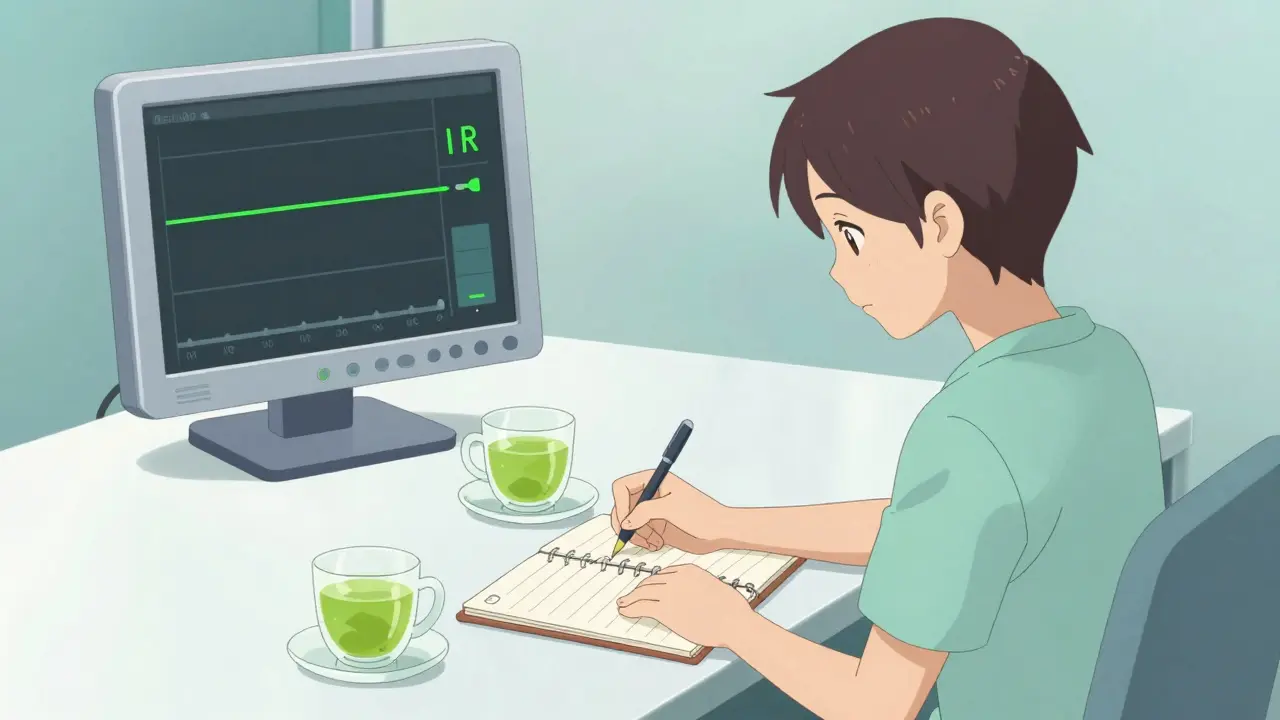
- Log your intake: If you're trying a new tea brand or changing your habits, keep a simple diary. This helps your provider determine if an INR shift is due to your diet or something else.
- Time your drinks: Since Vitamin K is absorbed within 3 to 6 hours and Warfarin has a long half-life, consistency is more important than the exact time of day you drink your tea.
If you find yourself consuming more than 500mL daily, it's a good idea to ask your healthcare provider about increasing your INR monitoring frequency. Moving from monthly to biweekly checks can catch a downward trend before it becomes a medical emergency.
Comparing Green Tea to Other "Problem" Foods
It's easy to get confused because different foods interact with Warfarin in different ways. For example, cranberry juice can inhibit the metabolism of the drug, which actually increases your INR and makes you bleed more. Green tea is different; its primary interaction is antagonistic, meaning it works against the drug to make the blood clot more easily.
Compare this to herbal supplements like Ginkgo Biloba. Ginkgo doesn't necessarily change your INR levels, but it affects how platelets stick together. This means you could have a "perfect" INR on paper but still bleed uncontrollably because the Ginkgo is attacking your platelets from a different angle. Green tea is unique because it hits both the Vitamin K pathway and the platelet pathway, creating that complex paradox mentioned earlier.
The Bottom Line for Patients
The goal of Warfarin therapy isn't to eliminate all Vitamin K-that would be nearly impossible and unhealthy. The goal is a steady state. Whether you choose to drink two cups of green tea daily or none at all, the key is to avoid sudden changes. If you're planning a "green tea detox" or suddenly deciding to switch to matcha, call your clinic first. A simple dose adjustment of 10-15% can often offset these dietary changes and keep you in the therapeutic range.
Can I drink green tea if I am on Warfarin?
Yes, most patients can safely enjoy green tea in moderation. The general consensus is that 1 to 3 cups (up to 720mL) per day typically does not interfere with Warfarin's efficacy or significantly alter INR levels. The key is consistency; drink the same amount daily rather than fluctuating.
Is matcha tea more dangerous than regular green tea?
Matcha is potentially riskier because it involves consuming the entire ground tea leaf, whereas regular green tea is just an infusion. This means matcha has a much higher concentration of Vitamin K, which can lower your INR and make Warfarin less effective. If you switch to matcha, you should notify your doctor for closer monitoring.
What happens to my INR if I drink too much green tea?
Excessive consumption (typically over 1 gallon per day) can provide enough Vitamin K to override the effects of Warfarin. This causes your INR to drop, meaning your blood clots more quickly and the risk of a stroke or deep vein thrombosis increases.
Should I stop drinking green tea entirely to be safe?
For most people, complete avoidance is unnecessary. Medical guidelines emphasize a "consistent intake" approach. Stopping a regular habit of green tea abruptly can actually cause your INR to spike dangerously high, increasing your risk of bleeding.
How often should I check my INR if I drink a lot of tea?
If you consume more than 500mL of green tea daily, clinical experts suggest increasing monitoring from monthly to biweekly. This ensures that any dietary impact on your blood clotting is caught early and can be managed with a small dose adjustment.
 Appearance Differences: Why Authorized Generics Look Different from Brand-Name Drugs
 How to Buy Cheap Generic Metformin Online Safely
 Caverta vs Other ED Pills: Detailed Comparison of Sildenafil Alternatives
 Hypernil (Lisinopril) vs Alternative Blood Pressure Drugs: A Practical Comparison
 Ovulation Induction Therapy: Your Guide to Success, Drugs & How Hormones Work